20 Everyday English Words That Came From Around the World
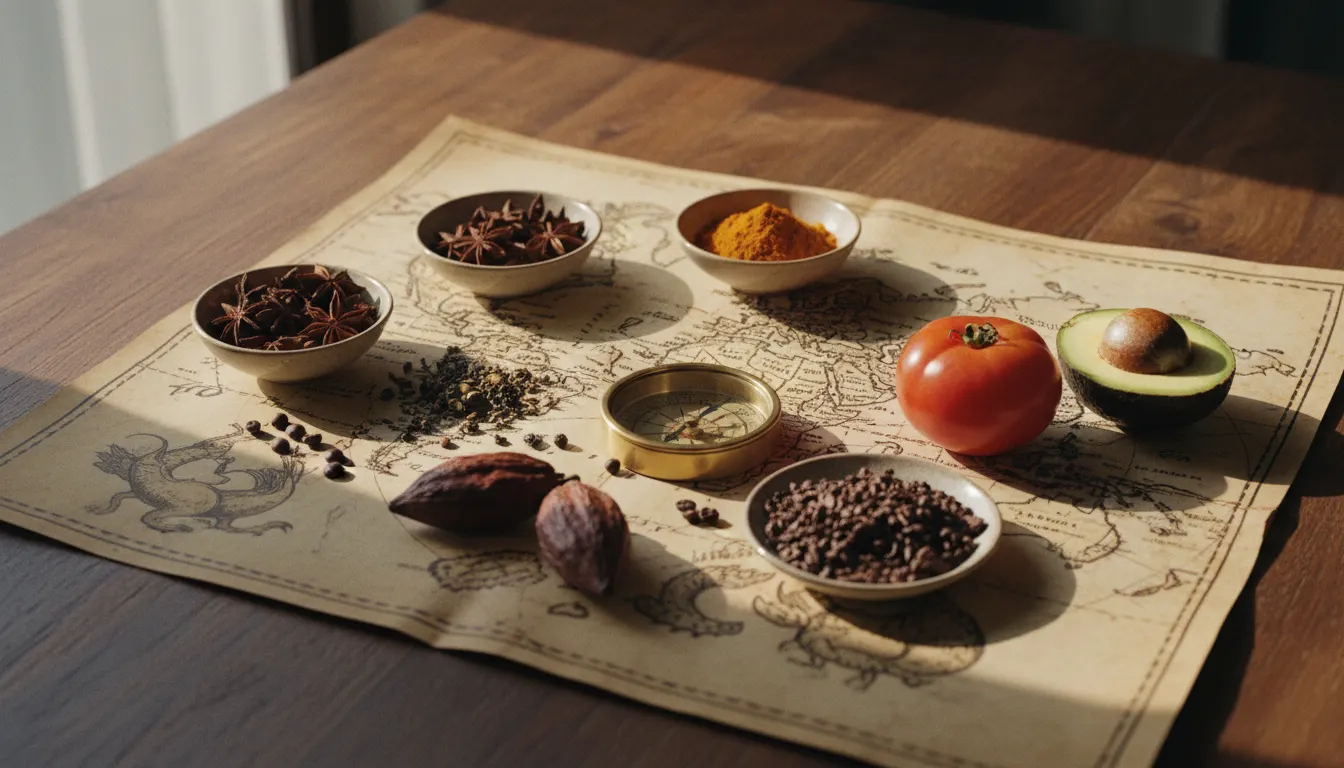
English has always been a borrower. Traders, travellers, scientists and cooks have carried words into it from almost every corner of the world, and many of those words are now so ordinary that it is hard to believe they were ever foreign. Here are twenty everyday examples, and where they came from.
| Word | Came from | The story |
|---|---|---|
| Shampoo | Hindi | From chāmpo, a form of the verb meaning "to press" or "to massage". It first meant a head massage, not soap. |
| Bungalow | Hindi and Gujarati | From words meaning "in the style of Bengal", describing a single-storey house. |
| Pyjamas | Urdu and Persian | From words for "leg" and "garment": originally loose trousers. |
| Jungle | Hindi | From jangal, meaning wild or uncultivated land. Its older Sanskrit source meant dry, rough ground. |
| Thug | Hindi | From ṭhag, meaning a thief or swindler. |
| Algebra | Arabic | From al-jabr, "the reunion of broken parts", from the title of a 9th-century mathematics book. |
| Coffee | Arabic | From qahwa, reaching English through Turkish and Dutch. |
| Sugar | Arabic | From sukkar, which itself traces back to Sanskrit. |
| Tomato | Nahuatl | From tomatl, in the language of the Aztecs, via Spanish. |
| Avocado | Nahuatl | From āhuacatl, via the Spanish aguacate. |
| Chocolate | Nahuatl | Reached English via Spanish. Its exact original form is still debated by language historians. |
| Kayak | Inuit | From the Inuit word qajaq, a one-person hunting boat. |
| Ketchup | Probably Hokkien Chinese | Most likely from a word for a fermented fish sauce. Tomatoes came much later. |
| Tea | Hokkien Chinese | From tê. The other common word, chai, comes from the Mandarin and Cantonese chá. |
| Safari | Swahili | Meaning "journey", borrowed in turn from Arabic. |
| Robot | Czech | From robota, "forced labour". It entered English through Karel Čapek's 1920 play R.U.R. |
| Cookie | Dutch | From koekje, "little cake". |
| Yacht | Dutch | From jacht, short for a phrase meaning "hunting ship". |
| Tycoon | Japanese | From taikun, meaning "great lord". |
| Karaoke | Japanese | From kara, "empty", and ōke, short for "orchestra". |
What the list tells us
Look at the languages and you can trace history. Words from Hindi and Urdu arrived largely through centuries of British trade and rule in India. Arabic gave English much of the vocabulary of mathematics and science, often by way of medieval Spain and Italy. Nahuatl words for foods such as tomato, avocado and chocolate came with those foods themselves, after the Spanish arrived in Mexico.
Dutch words such as yacht and cookie reflect centuries of seafaring and settlement, and Japanese loanwords like karaoke are a reminder that the borrowing has never stopped.
Why it matters for word lovers
Knowing where a word comes from often explains its spelling. The odd "kh" and "q" spellings you meet in word games, and the Q-without-U words that save a Scrabble rack, are almost all borrowings that kept something of their original form.
If you enjoy this kind of thing, our daily puzzle uses a different theme every day, from Cooking to Travel. Try today's puzzle.
Etymology is not always settled. Where language historians still disagree about a word's origin, as with chocolate and ketchup, we have said so.
Related reading: British vs American spelling
Ready to put it into practice?
Play Today's Puzzle →