How to Unscramble Words: 8 Tricks That Actually Work
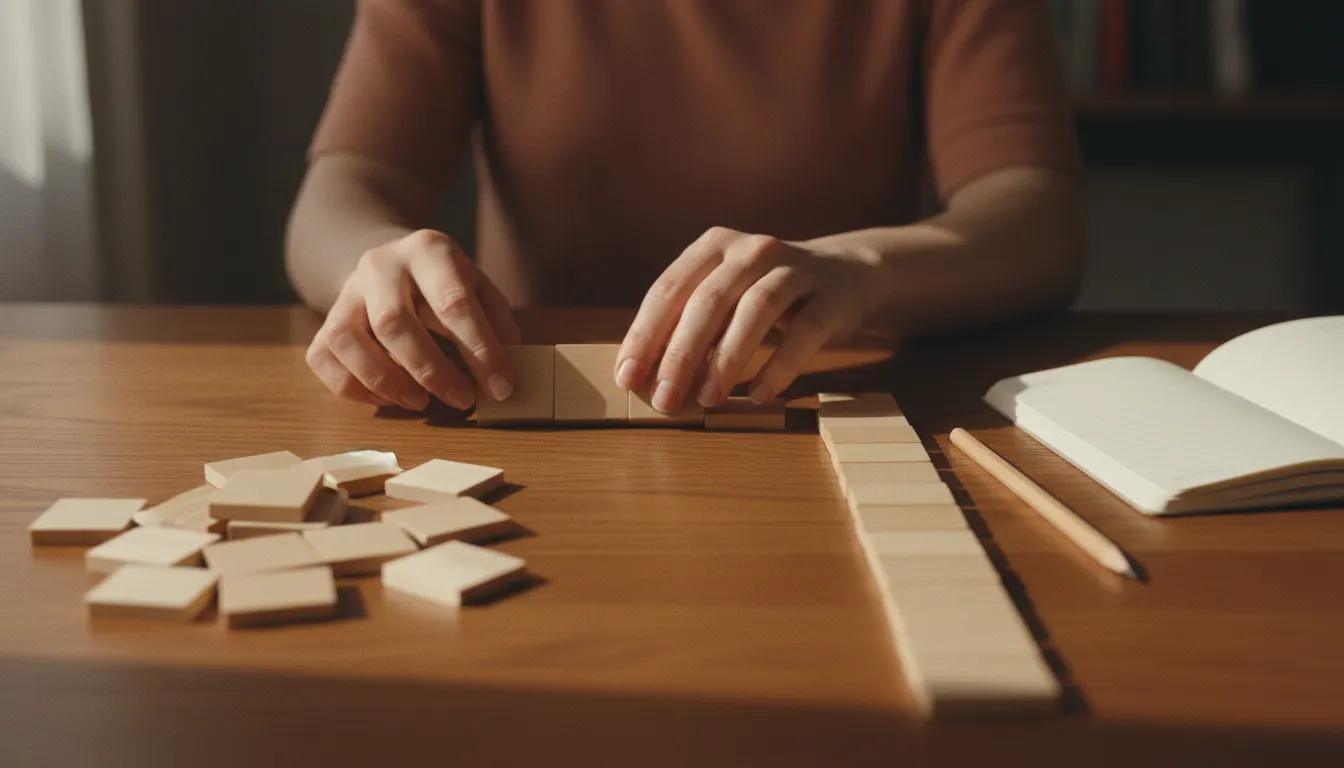
Staring at a jumble of letters and waiting for the word to appear rarely works. Good puzzlers have a handful of habits that turn guessing into searching, and none of them need a special talent. Here are eight that work for daily puzzles, crosswords, Scrabble racks and the Countdown letters round.
1. Look for an ending first
English words very often end with a small set of letter groups: -ING, -ED, -ER, -ES, -LY and -TION. If you can see one in your letters, set it aside and work with what is left.
Try G N I R T A S. Take out I, N and G for -ING, and you are left with R, T, A and S. Put them in front and you get STARING; rearrange them slightly and you get RATINGS. A seven-letter puzzle has become a four-letter one.
2. Then look for a beginning
Common beginnings include RE-, UN-, IN-, DIS-, PRE- and OVER-. Once you have found an ending, check whether any of these fit at the front.
3. Separate the vowels from the consonants
Write the vowels in one row and the consonants in another. It sounds simple, but it stops the jumbled order from misleading you, and it shows you at a glance whether the word is vowel-heavy (likely to have pairs such as EA, OU or IE) or consonant-heavy (likely to have clusters).
4. Find the consonant clusters
Certain consonants love to sit together: TH, CH, SH, ST, STR, NG, CK and QU. If you have a Q, you almost certainly need a U next to it. If you have an H, try it after C, S, T or W.
5. Rearrange the letters physically
Your eyes get stuck on the order the letters arrived in. Breaking that order helps. Write the letters in a circle, shuffle tiles around, or rewrite them in alphabetical order. A fresh arrangement often shows you a word you could not see before.
6. Try the most common letters in the most common places
Many words start with S, C, P or T, and many end in E, S, Y or D. Try putting one of those letters first or last and see what the rest suggests. With E O S H U, putting H first and E last quickly gives HOUSE.
7. Look for a smaller word inside
Long words are often built from shorter ones. In D E W R A R, you might spot WAR or RED. Building around those leads to REWARD and then DRAWER, which use exactly the same six letters.
8. Use the clue
If the puzzle gives you a theme or hint, use it to narrow your search. Knowing that C E A N O S is about travel makes OCEANS far easier to find than CANOES, although both use the same letters. Our daily puzzle always comes with a theme and a hint for exactly this reason.
Practise with a partner, not a cheat sheet
The best way to get faster is to have a go first, then check what you missed. Type your letters into our word unscrambler after you have tried, and look at the words you did not spot. Over time you will start seeing the same endings, clusters and patterns without thinking.
If you enjoy rearranging letters, you might also like our short history of anagrams.
Related reading: Scrabble bingo stems · Palindromes · The longest words in English
Ready to put it into practice?
Try the Word Unscrambler →