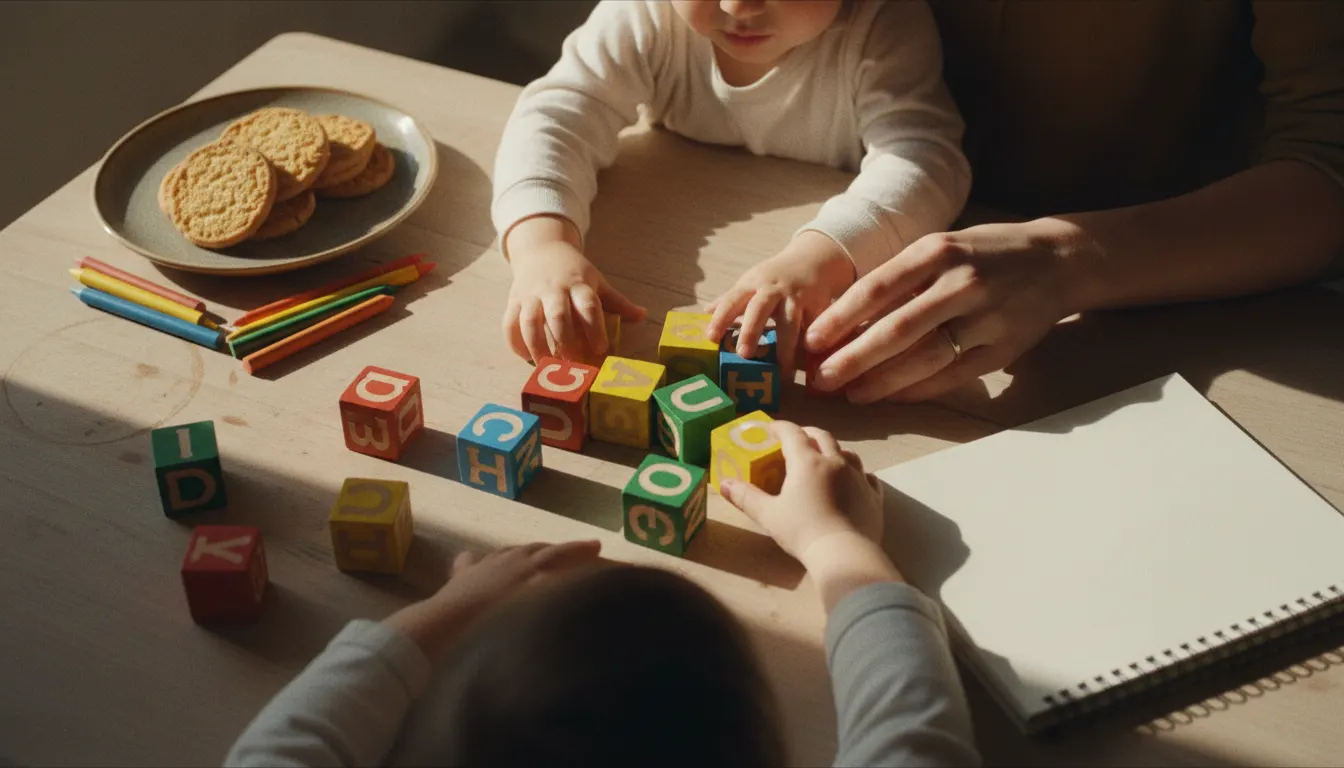
Word games are one of the easiest ways to make reading and spelling feel like play. Most need nothing more than a pencil, a car journey or a few spare minutes, and they work just as well for grandparents and grandchildren as for parents. Here are ideas organised by age, from first letters to tricky anagrams.
Ages 4 to 6: playing with sounds and letters
I spy, with letter sounds. Instead of letter names, use the sound: something beginning with /b/. It helps children connect letters to sounds.
Rhyme time. Say a word and take turns finding rhymes: cat, hat, mat, bat. Silly made-up rhymes are part of the fun.
Alphabet hunt. Find something in the room, or on a walk, for each letter of the alphabet.
Letter magnets. Make short words on the fridge, then change one letter to make a new word: cat, cot, cut.
Ages 7 to 9: building words
Hangman. A classic for spelling. Let children choose the words as well as guess them. Some families draw a flower losing its petals instead.
Word searches. Themed word searches (animals, food, space) are calming and good for recognising spelling patterns.
Word chains. Each word must start with the last letter of the one before: apple, egg, giraffe, elephant.
Short unscrambles. Mix up the letters of a three- or four-letter word for them to solve: TAC, GOD, NUF.
Ages 10 to 12: bigger challenges
How many words? Choose a long word such as BUTTERFLY and race to find the most shorter words inside it.
Word ladders. Change one letter at a time to turn one word into another: CAT, COT, DOT, DOG.
Daily word puzzles. A five-letter guessing game or our daily unscramble puzzle makes a quick daily challenge that can be shared at breakfast.
Board games. Tile games such as Scrabble build spelling and a little maths too. Junior editions are a gentle introduction.
Games for the whole family
Categories. Pick a letter and name an animal, a food, a country and a name that start with it.
Twenty Questions. Guess the mystery object with yes-or-no questions.
Story chains. Build a story one word or sentence at a time. The sillier the better.
Palindrome hunt. Who can find a word that reads the same backwards? Our guide to palindromes has plenty to start with.
Keep it fun
Follow their interests. Dinosaurs, football or animals all make good word lists.
Let them win sometimes, and let them set puzzles for you.
Keep it short. Five or ten minutes of a game they enjoy is worth more than a long session they do not.
Praise effort, not just answers. A clever wrong guess is still good thinking.
For older relatives joining in, our guide to word games for seniors has more ideas that work across generations.
We'd like to use analytics cookies to see which puzzles people enjoy and to fix things that don't work.
They stay off unless you say yes. Read our cookie policy.