Word Games for Seniors: 12 Gentle Games That Keep the Mind Busy
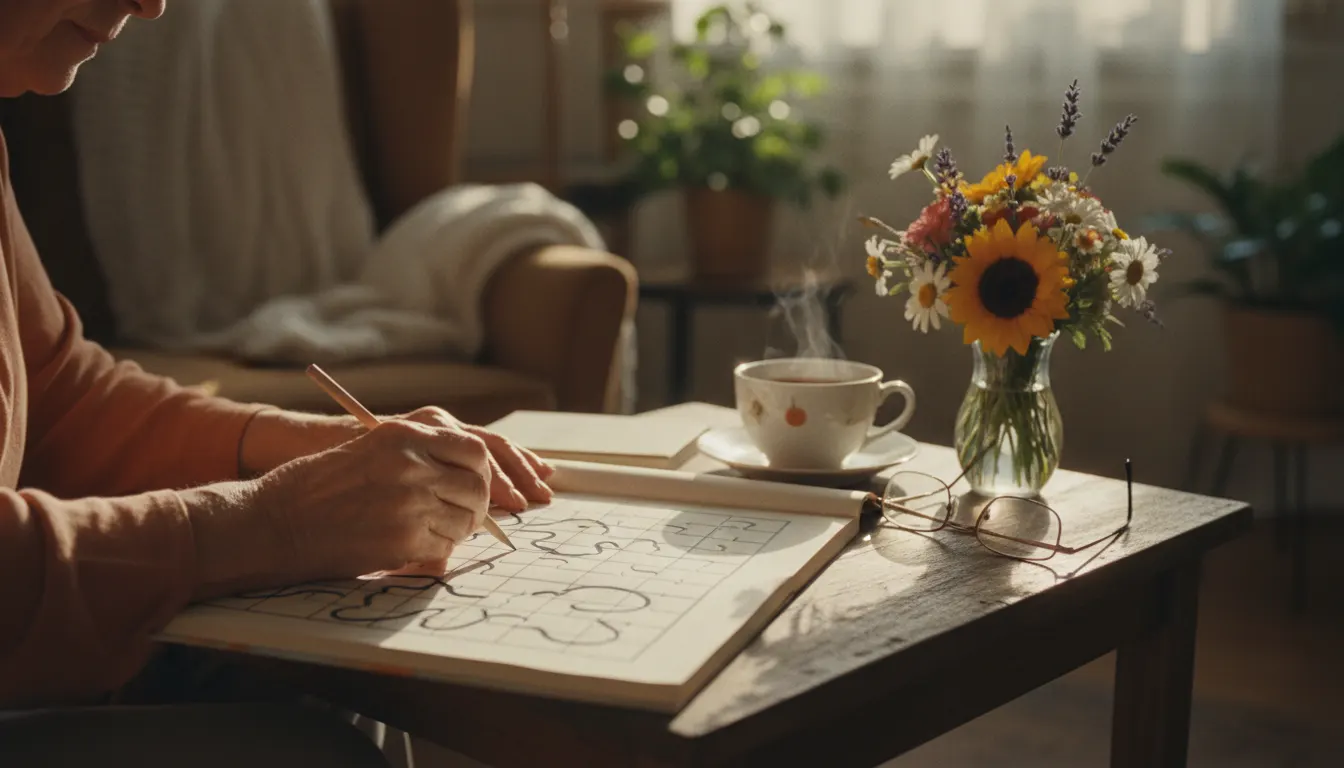
Word games are one of the simplest pleasures there is. They cost little or nothing, you can play them alone or with company, and there is always a satisfying moment when the right word clicks into place. For many older adults they are also a comfortable daily habit: something to do with the morning paper, a way to pass a quiet afternoon, or a reason to sit down with grandchildren.
This guide covers twelve word games that suit older players particularly well, how to make them easier on the eyes and hands, and how to keep them fun rather than frustrating.
Why word games suit older players
- They draw on what you already know. Vocabulary tends to keep growing well into later life, so word games play to a real strength.
- They adapt to any level. The same game can be made gentler or harder by changing the size of the puzzle, the time allowed or the help available.
- They are social. Many can be played aloud with family, friends or carers, which often matters more than the game itself.
- They are calm. Most word games have no time limit unless you choose one.
It is worth being honest about one thing: word games are a pleasant way to stay mentally active, but they are not a medical treatment, and research has not shown that they prevent memory problems on their own. We look at what the evidence does say in what science says about word puzzles and brain health.
Games to play on your own
1. Crosswords
The classic. Quick crosswords use straightforward definitions and are a good place to start; cryptic crosswords add wordplay and suit people who enjoy a challenge. Many newspapers offer both, and large-print crossword books are widely available.
2. Word searches
Find the hidden words in a grid of letters. Word searches are relaxing, easy to pick up and good for people who prefer spotting to spelling. Look for large-print editions with fewer, bigger letters.
3. Unscramble puzzles
Rearrange a jumble of letters to make a word. A theme and a hint make them much friendlier: knowing the answer is a garden word narrows things down nicely. That is exactly how our free daily puzzle works, with one word a day, big letters and no timer.
4. Wordle-style puzzles
Guess a five-letter word in six tries, using colour clues. One puzzle a day, finished in a few minutes, with a pleasing sense of progress. Our calm guide to Wordle explains the colour clues and a simple routine.
5. Word ladders
Change one word into another, one letter at a time, making a real word at every step: COLD, CORD, WORD, WORM, WARM. You can do these with just a pencil and paper, and they are easy to make up for someone else.
6. How many words?
Take a long word such as GARDENING and see how many shorter words you can make from its letters. There is no wrong answer and no finish line, which makes it very relaxing. Our word unscrambler will show you the ones you missed afterwards.
Games to play with others
7. Scrabble and other tile games
Building words on a board is sociable and absorbing. If small tiles are hard to see or handle, large-print and larger-tile editions exist. Learning a few two-letter words makes the game much easier.
8. Categories
Choose a category and a letter, then take turns naming things that fit: animals beginning with B, foods beginning with P. No equipment needed, and it works well at the dinner table or on a car journey.
9. Hangman
One person thinks of a word and the others guess letters. Simple, familiar and easy to adjust by choosing shorter or longer words. Many people prefer to draw a flower losing its petals rather than the traditional gallows.
10. Twenty Questions
One person thinks of something; everyone else asks yes-or-no questions to work out what it is. It is excellent for conversation and needs nothing at all.
11. Rhyme time
Say a word, and take turns giving words that rhyme with it until someone gets stuck. Light-hearted and quick, and especially fun with children.
12. Story chains
Each person adds one word, or one sentence, to a story. The results are usually silly, which is the point. It is a lovely game for mixed ages.
Making games easier on the eyes and hands
- Choose large print. Most puzzle books come in large-print editions. On screens, increase the text size or zoom in.
- Get the lighting right. Bright, even light without glare makes a real difference, especially for word searches.
- Use a magnifier or reading stand if small print is still a struggle.
- Go digital where it helps. A tablet lets you enlarge text, switch to a dark background in the evening and avoid fiddly pencils.
- Pick larger tiles or cards for board games if fingers are stiff.
Our website was designed with all of this in mind: large type, warm high-contrast colours, a dark mode, and no timers, pop-ups or sign-up.
Keep it fun
- There is no wrong way to play. Use the hint, look up a word, or skip a puzzle you are not enjoying.
- Turn off timers and scores if they feel like pressure.
- Play together. Sharing a puzzle with someone else, in person or over the phone, often becomes the best part.
- Pick a regular moment. A puzzle with the morning cup of tea is easy to keep up.
If someone is living with memory problems
Word games can still be enjoyable for people living with dementia or memory loss, but the approach matters. Choose familiar words and simple games, focus on taking part rather than getting answers right, and stop while it is still fun. Activity coordinators, care staff and organisations such as the Alzheimer's Society can suggest activities suited to the person and their stage.
This article is for general interest and is not medical advice.
Related reading: Word games for English learners · The daily puzzle habit · Word games for kids
Ready to put it into practice?
Play Today's Puzzle →